Starting January 4, 2027, condo associations will need to set aside more money for future repairs if buyers in their buildings are to keep getting regular Fannie Mae and Freddie Mac mortgages. The minimum reserve allocation for applicable condo projects rises from 10% to 15% of the association’s annual budgeted assessment income. On November 19, five housing and mortgage trade groups asked the Federal Housing Finance Agency (FHFA) to push the deadline back to January 4, 2028. As of now, no delay has been granted, so the January date still stands.
Here’s what the condo reserve requirement means for your monthly dues, for selling or refinancing your unit, and for buyers shopping for a condo this winter.
What is changing on January 4, 2027?
Fannie Mae announced the change in Lender Letter LL-2026-03 on March 18, 2026, together with a companion Freddie Mac bulletin. On its condo resource page, Fannie Mae says that beginning January 4, 2027, its “minimum reserve requirement for applicable condo projects will increase from 10% to 15% of annual budgeted assessment income.”
A few details matter:
- It’s tied to the loan application date. The higher standard applies to covered loans with application dates on or after January 4, 2027, not just loans that close after that date, National Mortgage Professional reports. Freddie Mac has also said lenders must confirm compliance for applications received on or after the effective date, even if an earlier project review hasn’t expired.
- It isn’t a Fannie Mae fee. The money stays in the association’s reserve fund for big future repairs such as roofs, elevators, paving and building systems.
- 15% is a floor, not a cap. Fannie Mae says the figure is a minimum standard. Many associations already budget more.
- More buildings get a full review. Fannie Mae retired its Limited Review option on August 3, 2026, so condo loans now go through a Full Review of the project’s finances, according to an explainer by real estate attorney Steve Adamczyk of Varnum LLP.
Two ways a condo building can qualify
An association doesn’t have to hit 15% if it can meet a reserve study alternative. According to the Varnum LLP explainer, there are two paths.
Option 1: Budget at least 15% for reserves
The association’s adopted annual budget shows at least 15% of qualified assessment income going to replacement reserves. No reserve study is needed under this option. Fannie Mae says lenders can use the project budget or financial information to verify it. Certain income doesn’t count toward the base, such as special assessments, utility pass-throughs like water or bulk cable, and incidental income.
Option 2: Use a current reserve study
A building can qualify with a lower budgeted reserve share if it has a reserve study done or updated within the past three years and funds reserves at the highest recommended contribution in that study. If the study offers several funding plans, the association has to follow the most conservative one.
For Florida buildings, a state-required structural integrity reserve study (SIRS) doesn’t automatically satisfy Fannie Mae, the explainer notes. Florida generally requires a SIRS at least every 10 years, while Fannie Mae’s alternative needs a study from the past three years. Florida law lets associations fund those reserves through regular or special assessments, loans or lines of credit, but some of those methods may not satisfy Fannie Mae.
How much will condo HOA fees go up?
Fannie Mae estimates the higher allocation adds about $13 to $14 a month on average per unit. Your building could be very different. Associations already near 15% may barely change, while those budgeting close to 10% would need to raise reserve contributions by about half. The trade groups’ letter included examples of how costs could rise if associations funded the whole increase through regular assessments.
This comes on top of other pressures on monthly dues, including master-policy insurance costs. If you’re trying to understand what your monthly fee pays for, see our guide to what HOA fees cover and how they’re set, and our look at why home insurance premiums have outpaced payouts.
Why trade groups want a one-year delay
The November 19 letter to FHFA Director Bill Pulte was signed by the Community Associations Institute, the Community Association Roundtable, the Community Home Lenders of America, the Housing Policy Council and the National Association of Mortgage Brokers, HousingWire reported. The groups said they support well-funded reserves but raised three main concerns:
- Timing. Many associations run on annual budgets that are hard to change mid-year. Some need new reserve studies, board votes or owner input before raising contributions.
- Loss of conventional financing. Buildings that can’t meet the standard or the reserve study alternative could lose eligibility for Fannie Mae and Freddie Mac loans. That could shrink the pool of buyers, make it harder for owners to sell or refinance, and put pressure on resale values. The letter said older buildings, smaller communities and associations with more modest-income owners could be hit hardest.
- Cost. Higher reserve contributions add to housing costs at a time when owners already face high mortgage payments, property taxes, insurance premiums and association fees.
“Condominium project eligibility has already declined following recent changes to project review requirements, including the elimination of Limited Review options,” the groups wrote. They also asked FHFA to clarify how existing reserve studies and funding arrangements will be treated and to create transition rules. FHFA had not publicly responded to the letter as of RealtyToday’s November 20 report.
What happens if your building doesn’t qualify?
Private lenders don’t have to follow Fannie Mae’s rules, but many sell their loans to Fannie Mae or Freddie Mac, so they write loans to those standards from the start. When a project doesn’t qualify, buyers may have to use portfolio lenders, non-qualified mortgage products or cash. Those options often come with bigger down payments or higher interest rates, according to the Varnum LLP explainer. Fewer eligible buyers can mean less demand for units in that building.
That matters more in a slow market. With contract signings and sales near record lows, condo sellers have less room for financing problems; see why buyers have more negotiating power this winter.
What condo owners should do now
- Ask your board or manager where the 2027 budget stands. Find out what percentage of assessment income goes to reserves and which option the association plans to use.
- Check the reserve study date. If the building relies on a study, it needs to be from the past three years and funded at the highest recommended level.
- Look up your building’s status. Fannie Mae offers a Condo Status Finder tool on its condo page to see how a project measures up.
- Plan for a dues change. Budget for a possible increase or a special assessment, especially in an older building with deferred maintenance.
- Refinancing soon? Talk to your lender about timing, since the rule follows the application date.
What condo buyers should do now
- Request the condo questionnaire, budget and reserve study early, before you’re deep into the contract.
- Ask your lender whether the project is eligible for a conventional loan, and whether your application will be dated before or after January 4.
- Compare the reserve share with 15%. A building far below that, without a current reserve study, could face financing problems or a dues hike.
- Read meeting minutes for talk of special assessments, major repairs or insurance changes.
For more on getting ready to buy, see our tips for first-time homebuyers.
FAQ
Does the 15% condo reserve rule apply to every condo?
It applies to condo projects reviewed for Fannie Mae and Freddie Mac financing under Full Review. Fannie Mae has also expanded a review waiver to certain projects with 10 or fewer units. FHA and VA loans have their own condo rules.
Has the January 4, 2027 deadline been delayed?
Not as of November 23, 2026. Trade groups asked for a delay to January 4, 2028, but that is only a request. Associations are being told to keep preparing for January 4.
Does my building need a reserve study?
Not always. A building can meet the 15% budget standard without one. A reserve study is the alternative route if the association budgets less than 15%.
Will my HOA fees definitely go up?
Not necessarily. Fannie Mae says most projects already meet its requirements. Buildings budgeting close to 10% for reserves are the ones most likely to raise dues.
This article explains published rules and news reports and isn’t legal, financial or mortgage advice. Check with your lender and your association for details on your building.
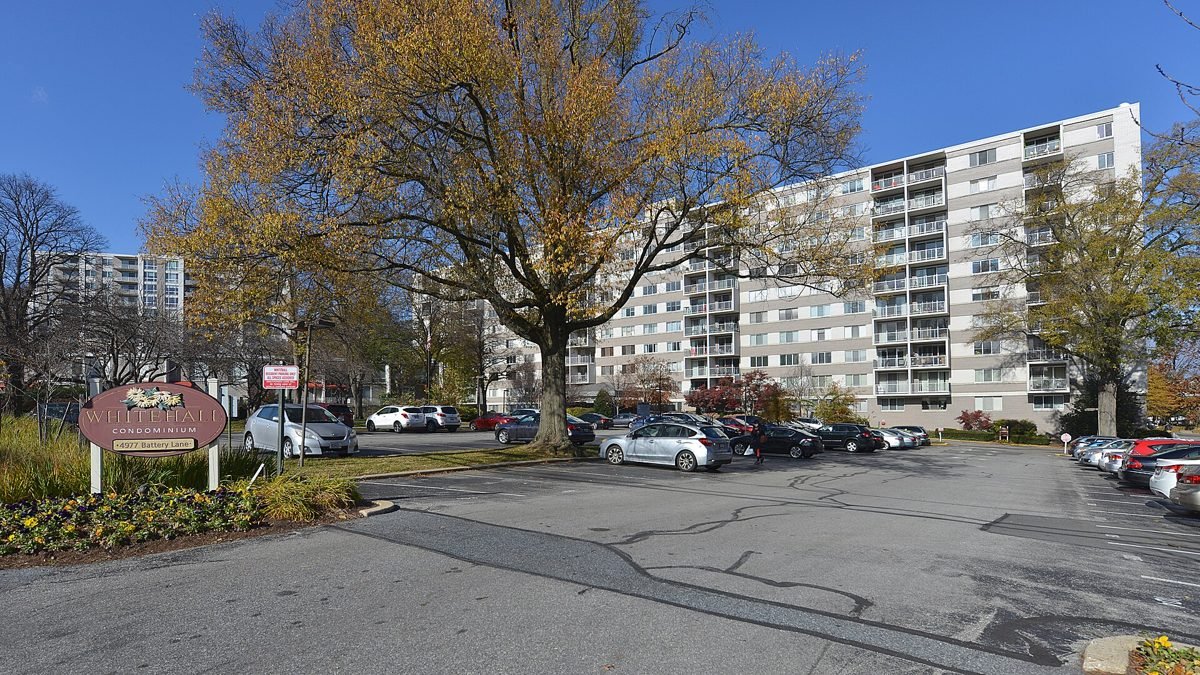
Featured image: “Whitehall Condominium 4977 Battery Ln Bethesda MD 2021-11-28 11-35-31 1” by G. Edward Johnson, via Wikimedia Commons, licensed under CC BY 4.0. Resized. The building is shown for illustration only.