2027 Conforming Loan Limit Rises to $855,400: What the New Fannie Mae and Freddie Mac Limits Mean for Buyers
FHFA raised the 2027 conforming loan limit to $855,400 for most of the U.S. and $1,283,100 in high-cost areas. Here are the new limits by unit count, county examples, the 24 counties that didn’t change and what it means for buyers, refinancers, FHA and VA borrowers.
The amount you can borrow with a standard mortgage backed by Fannie Mae or Freddie Mac is going up again. On Nov. 24, 2026, the Federal Housing Finance Agency (FHFA) set the 2027 conforming loan limit for a one-unit home at $855,400 in most of the U.S. That’s $22,650 more than the 2026 limit of $832,750.
The short answer: starting Jan. 1, 2027, you can take out a conventional conforming loan of up to $855,400 in most counties and up to $1,283,100 in the most expensive markets, without moving into jumbo territory. If your loan amount falls between the old and new limits, the timing of your closing and your lender’s policy could decide which kind of loan you get. Here’s what changed and how to check the limit for your county.
2027 conforming loan limits at a glance
FHFA says the higher limits apply to loans Fannie Mae and Freddie Mac acquire in 2027. Fannie Mae’s lender letter confirms they take effect for loans delivered, or placed in mortgage-backed securities with issue dates, on or after Jan. 1, 2027. These are the 2027 limits by number of units, taken from FHFA’s county-by-county list:
Property
2026 baseline
2027 baseline
2027 high-cost ceiling
1 unit
$832,750
$855,400
$1,283,100
2 units
$1,066,250
$1,095,250
$1,642,875
3 units
$1,288,800
$1,323,900
$1,985,850
4 units
$1,601,750
$1,645,350
$2,468,025
Special rules apply in Alaska, Hawaii, Guam and the U.S. Virgin Islands. There, the 2027 baseline for a one-unit home is $1,283,100 and the ceiling is $1,924,650.
Why the limit went up 2.72%
The Housing and Economic Recovery Act of 2008 (HERA) requires FHFA to adjust the baseline limit each year to match the change in average U.S. home prices. FHFA uses its own House Price Index. The third-quarter 2026 report, released the same day, showed prices rose 2.72% on average between the third quarters of 2025 and 2026, so the baseline limit went up by the same percentage.
That’s a smaller increase than in recent years. HousingWire notes that last year’s increase was 3.25% and the two years before that were each above 5%. The slower pace fits a cooler market. Home sales have been weak and buyers have more room to bargain, as we covered in our report on existing home sales falling to their lowest level since 2010.
Under the law, the limit can’t go down. FHFA’s FAQ explains that if national prices are flat or falling, the baseline stays the same until the losses have been fully recovered. County limits get similar protection.
High-cost areas: who gets more than $855,400
In expensive markets, the limit can go higher. If 115% of the local median home value is more than the baseline, the county gets a higher limit, up to 150% of the baseline. For 2027 that cap is $1,283,100 for a one-unit home. In FHFA’s 2027 file, 3,071 of the 3,235 counties and county equivalents are at the $855,400 baseline. The rest have higher limits.
A few examples from FHFA’s list (one-unit limits):
Los Angeles and San Francisco counties, Washington, D.C., Fairfax County, Va., and Honolulu: $1,283,100, up from $1,249,125
New York County (Manhattan) and Bergen County, N.J.: $1,224,750, up from $1,209,750
San Diego County: $1,143,100, up from $1,104,000
Davidson County (Nashville), Tenn.: $1,086,750, up from $1,029,250
Monroe County (Florida Keys): $1,035,000, up from $990,150
Suffolk County (Boston), Mass.: $977,500, up from $962,550
The 24 counties where the limit didn’t change
FHFA says limits will rise in all but 24 counties or county equivalents. In its 2027 list, those 24 include King, Pierce and Snohomish counties in the Seattle area, much of the Denver metro (including Denver, Adams, Arapahoe, Douglas and Jefferson counties), Napa and Sonoma counties in California, and Maui County, Hawaii. In those places, local median home values didn’t support a higher limit, and FHFA’s hold-harmless rule kept the limit from dropping. King County stays at $1,063,750 and Denver at $862,500.
What the new limit means for buyers and homeowners
Staying under the conforming limit matters because loans above it are jumbo loans. HousingWire explains that the jumbo market is still mostly made up of banks and portfolio lenders, and each sets its own credit standards. Jumbo loans often ask for bigger down payments, higher credit scores or more cash reserves, though the details depend on the lender.
Example: a $950,000 home
Say you’re buying a $950,000 home in a county at the baseline limit and putting 10% down. That’s a $855,000 loan. Under the 2026 limit it would be a jumbo loan. Under the 2027 limit it fits, with $400 to spare. With 20% down, it’s a $760,000 loan that was conforming under either limit. For buyers near the line, the new limit can mean a smaller down payment while keeping a conventional loan.
Lenders started moving early
Many lenders didn’t wait for the announcement. According to HousingWire, Rocket Mortgage and CrossCountry Mortgage raised their internal conforming limits to $845,000 back in September. Pennymac went to $850,000 and United Wholesale Mortgage to $847,440. So if your loan is just above $832,750 and you plan to close in December, ask your lender whether it will accept loans up to the 2027 limit now, or whether you’ll need to close or have the loan delivered after Jan. 1.
Refinancing
Homeowners with jumbo loans who are thinking of refinancing may also find their balance is now under the limit. The conforming limit applies to the new loan amount, not the price you paid for the home. FHFA’s FAQ notes that the limit caps the loan size, not the purchase price.
What about FHA and VA loans?
FHA: HUD sets FHA loan limits on its own schedule. As of Nov. 24, its lender page still showed the 2026 limits: a floor of $541,287 and a ceiling of $1,249,125 for a one-unit home. Those numbers equal 65% and 150% of the 2026 conforming limit. If HUD uses the same percentages for 2027, the floor would be about $556,010 and the ceiling $1,283,100. Wait for HUD’s official mortgagee letter before counting on those figures.
VA: According to the VA, veterans with full entitlement have no VA loan limit, as long as the lender approves the loan and the appraisal supports the price. If you have already used part of your entitlement, the VA uses the FHFA one-unit county limit to work out how much bonus entitlement you have left. That means the new 2027 limits can raise how much some veterans can borrow with no down payment.
Find your state and county. Use the column that matches your property: one, two, three or four units.
Compare that number with your expected loan amount, which is the price minus your down payment, not the price itself.
If you’re close to the limit, ask your lender how timing affects your loan and whether a slightly larger down payment would keep you conforming.
If you’re buying new construction, also compare builder incentives. Our guide to how builder rate buydowns work explains what to ask.
If you’re a first-time buyer, our first-time home buyer guide covers the rest of the process, from preapproval to closing.
FAQ
What is the conforming loan limit for 2027?
$855,400 for a one-unit home in most U.S. counties. High-cost areas go up to $1,283,100. Alaska, Hawaii, Guam and the U.S. Virgin Islands have a $1,283,100 baseline and a $1,924,650 ceiling.
When do the 2027 loan limits take effect?
Jan. 1, 2027. Some lenders already lend above $832,750 under their own policies, so ask yours.
Is the conforming loan limit the most I can spend on a house?
No. It caps the loan amount, not the purchase price. With a bigger down payment, you can buy a more expensive home with a conforming loan.
Did the limit go down anywhere?
No. HERA doesn’t allow decreases. In 24 counties, mostly around Seattle and Denver plus Napa, Sonoma and Maui, the limit stayed the same as in 2026.
Are FHA loan limits for 2027 out?
Not as of Nov. 24, 2026. HUD usually publishes them in late November or December, and they take effect for case numbers assigned on or after Jan. 1.
This article explains public announcements and is not financial advice. Loan approval and terms depend on your lender. Sources: FHFA news release and 2027 county limit list (Nov. 24, 2026), FHFA Conforming Loan Limit FAQs (November 2026), Fannie Mae Lender Letter LL-2026-10, HousingWire (Nov. 24, 2026), HUD and VA.
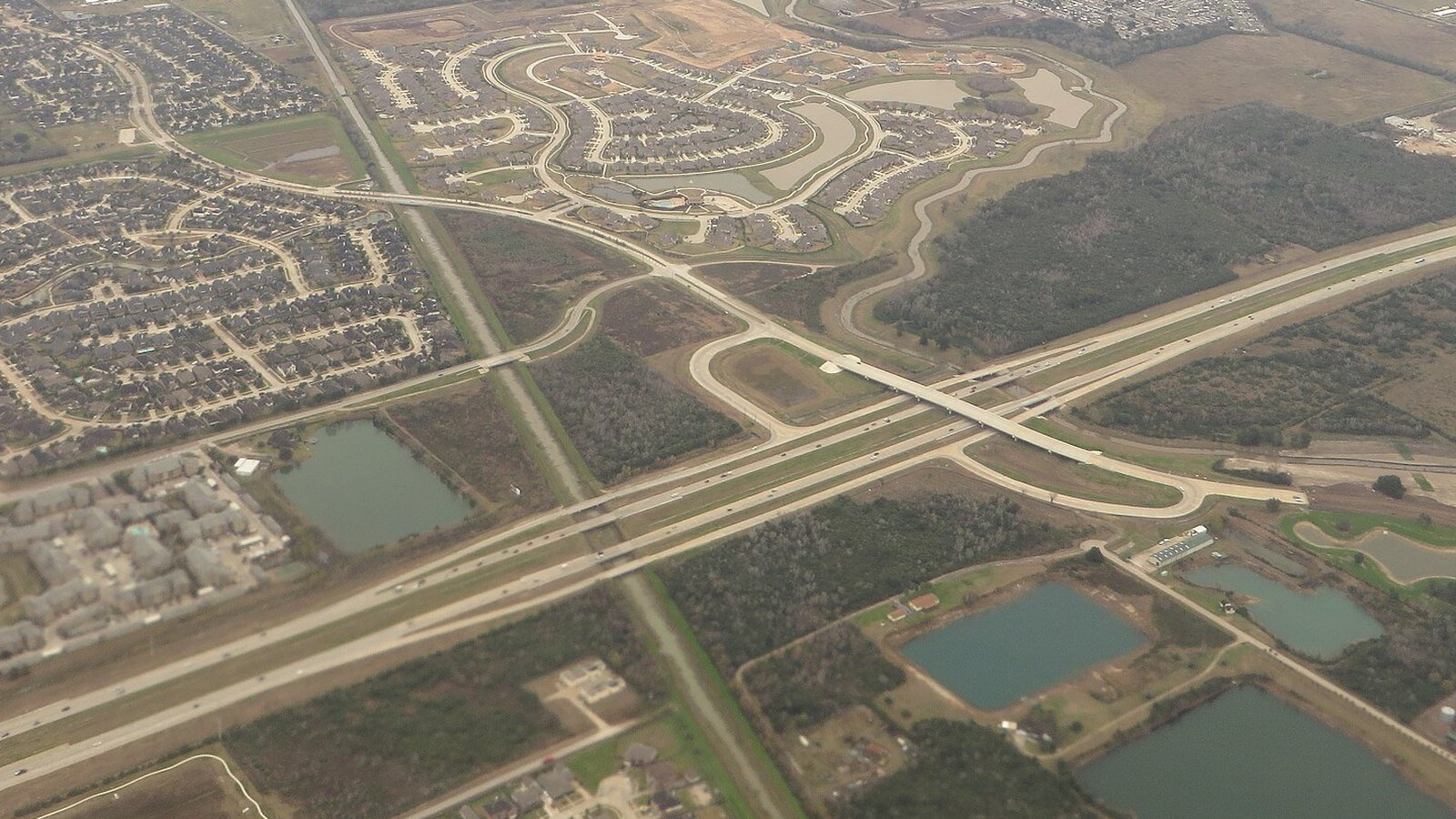
Featured image: “New Development, Pearland, Texas” by Ken Lund, via Wikimedia Commons, licensed CC BY-SA 2.0 (cropped).
Mai is Candy Bird's go-to writer for everything around the house, from repairs and DIY fixes to smart storage, energy-saving upgrades and buying or selling a home. Her advice is practical, easy to follow and comes with a touch of humor, whether you're a first-time homeowner or a seasoned DIYer.
Candy Bird is ad-supported. Our guides are general information, not professional, legal or financial advice: check with a licensed contractor, agent or lender before big decisions.