If you’re shopping for a home while mortgage rates sit above 7%, a brand-new house may come with a cheaper loan than a resale. A Realtor.com New Construction Insights report released November 17, 2026 found that new-home buyers paid an average 30-year fixed rate of 6.19% in the third quarter, compared with 6.68% for buyers of existing homes. Counting adjustable-rate loans and temporary deals, the average starting rate was 5.01% for new homes versus 6.15% for existing ones. The reason is simple: builders are paying to lower buyers’ rates instead of cutting their list prices.
Here’s what the new numbers show, how builder rate buydowns work, and the questions to ask before you sign a contract on a new build.
What the Realtor.com Report Found
Realtor.com compared the mortgage rates recorded on actual home purchases in its public records data. The gaps were meaningful:
- Starting rate (all loan types): 5.01% for new homes vs. 6.15% for existing homes. On a $400,000 purchase with 10% down, Realtor.com estimates that works out to about $258 less per month in interest during the first year.
- 30-year fixed rate: 6.19% for new homes vs. 6.68% for existing homes. On the same purchase, that’s about $117 less per month in interest, and it lasts for the full 30-year term.
- Price per square foot: almost identical, at a median of $218 for new homes and $219 for existing homes. New homes cost nearly $50,000 more at the median, but they’re also bigger (2,056 vs. 1,790 square feet).
- Share of the market: newly built homes made up 16.7% of listings in the third quarter, down from 17.2% a year earlier, as construction slows.
“Builders have adjusted to a market where affordability is still a major hurdle, but that adjustment isn’t always visible in the listing price,” Realtor.com senior economist Joel Berner said in the release.
Why Builders Are Paying Down Rates Instead of Cutting Prices
Builders are under real pressure. The NAHB/Wells Fargo Housing Market Index fell to 29 in October, the lowest reading since June 2012, and the gauge of buyer traffic dropped to 18. In that survey, 43% of builders said they cut prices, the highest share since at least 2020, with an average cut of 6%. And 65% used sales incentives, the 19th straight month that at least 60% of builders did so. NAHB’s November reading is scheduled for release on November 17 at 10 a.m. Eastern.
There’s also plenty of inventory to move. Real Estate News notes that the Census Bureau estimated an 8.4-month supply of new homes in September, well above the 5.1-month supply of existing homes that NAR reported for October. With existing home sales at their lowest level since 2010, builders are competing hard for a smaller pool of buyers.
A rate incentive lets a builder lower your monthly payment without lowering the sticker price, which protects the value of every other home in the community. Large builders often have their own mortgage companies or lender partners, which makes these deals easier to offer. That doesn’t mean they’re cheap for builders. M/I Homes CEO Bob Schottenstein told investors in October that rate buydowns remain the company’s “primary incentive to drive sales,” but that their cost rose as rates climbed.
How Builder Rate Buydowns Work
Not every “low rate” offer is the same. Before you compare a new build with a resale, find out which kind of deal you’re getting.
Permanent buydown
The builder pays discount points at closing to lower your interest rate for the life of the loan. According to the Consumer Financial Protection Bureau, one point equals 1% of the loan amount, so one point on a $360,000 loan costs $3,600. How much each point lowers the rate depends on the lender, the loan type and the market. This is the kind of saving reflected in the 6.19% vs. 6.68% fixed-rate gap.
Temporary buydown
The builder funds a lower rate for the first year or two, then the rate rises to the loan’s full note rate. In a common “2-1” structure, the rate is 2 percentage points lower in year one and 1 point lower in year two. Berner warned that “it’s important to understand how long the lower rate lasts,” because a temporary buydown helps early on but doesn’t change the long-term rate.
Adjustable-rate loans
Some of the lowest advertised builder rates are adjustable-rate mortgages (ARMs), which are fixed for a set period and can then reset. In an earlier study, Realtor.com found that reduced-rate offers on new listings averaged 3.92% in August 2026, but noted that many of those were ARMs or temporary buydowns, and urged buyers to budget for higher payments in later years.
Other Incentives Builders Are Offering
In that same August study, 18.8% of new home listings on Realtor.com advertised some kind of incentive. Reduced rates were by far the most common (13.8% of listings), followed by:
- Flex cash for closing costs or upgrades (4.8%)
- Closing cost assistance (2.9%)
- Cash at closing (1.3%)
- Free upgrades (1.0%)
- Included appliances (0.7%)
Is a New Build With a Buydown the Better Deal?
It can be, but compare the full cost, not just the rate. Mortgage rates have jumped again this month: Zillow data cited by Yahoo Finance put the average 30-year fixed purchase rate at 7.39% on November 17, up 46 basis points from a week earlier. That’s above the third-quarter averages in the Realtor.com report, so today’s quotes, and the cost of buying them down, may differ. For more context, see our look at where mortgage rates were headed after the midterms.
Here’s how to weigh an offer:
- Get the rate type in writing. Ask whether the rate is fixed for 30 years, temporary, or an ARM, and what your payment will be in years one, two, three and after any reset.
- Ask for a price-cut alternative. With 43% of builders cutting prices, ask what the builder would take off the price instead of buying down the rate. A lower price also means a smaller loan and lower property taxes.
- Check if you must use the builder’s lender. Many incentives only apply with the builder’s affiliated lender. Get a Loan Estimate from at least one outside lender too, and compare the points listed on page 2, Section A, as the CFPB suggests.
- Compare the whole package. Add up closing costs, HOA dues, upgrades, lot premiums and the cost of finishing items like window coverings or landscaping. A resale might cost less overall even with a higher rate.
- Think about how long you’ll keep the loan. A permanent buydown pays off most if you keep the mortgage for years. If you plan to refinance soon, an upfront price cut or closing-cost help may be worth more.
- Still get an inspection. New homes can have defects, too. Hire an independent inspector before closing and before your builder warranty walk-through.
If you’re buying your first home, our tips for first-time homebuyers walk through budgeting, pre-approval and making an offer.
FAQ
What is a builder rate buydown?
It’s when a home builder pays money at closing to lower the interest rate on your mortgage, either for the full loan term (a permanent buydown) or for the first year or two (a temporary buydown).
How much lower are new-home mortgage rates?
Realtor.com found new-home buyers paid an average 30-year fixed rate of 6.19% in the third quarter of 2026, versus 6.68% for existing-home buyers. Across all loan types, the average starting rate was 5.01% vs. 6.15%.
Do I have to use the builder’s lender to get the incentive?
Often, yes. Many builder rate offers are tied to an affiliated or partner lender. Ask the builder directly, and compare its Loan Estimate with offers from other lenders.
Is a temporary buydown a good idea?
It can lower your payments early on, but your rate and payment rise once the buydown ends. Make sure you can afford the full payment at the loan’s note rate.
This article is general information, not financial advice. Mortgage terms vary by lender and borrower, so compare written offers and consider talking with a HUD-approved housing counselor.
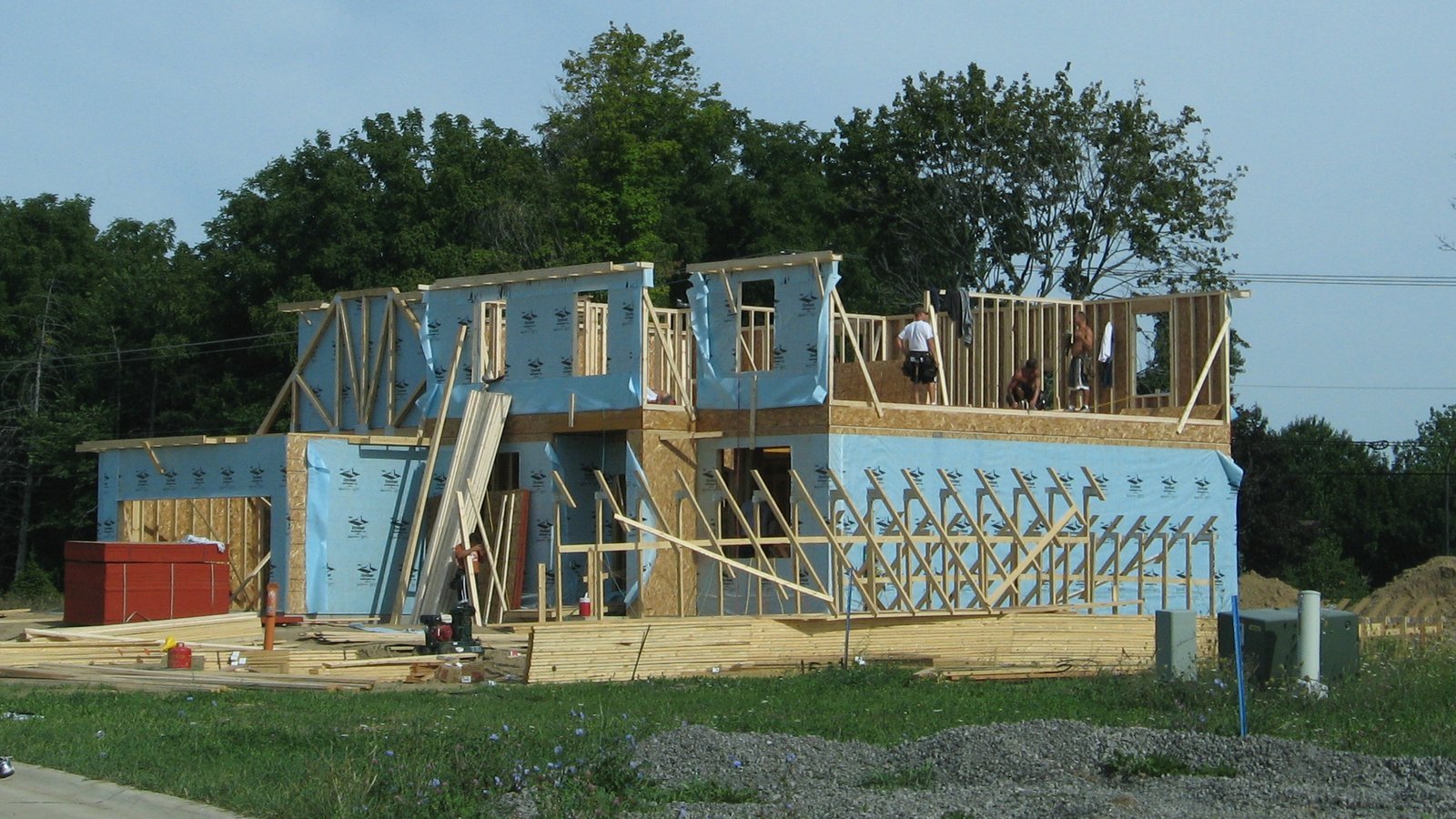
Featured image: “New house under construction Pittsfield Township Michigan” by Dwight Burdette, via Wikimedia Commons, licensed under CC BY 3.0. Cropped.