If you have a blue Harkla compression sensory swing hanging from a ceiling in your home, stop using it until you’ve checked the hook. On Oct. 29, 2026, Harkla recalled about 25,541 children’s sensory swings in the U.S. (plus about 5,534 in Canada) because the four-hole ceiling hook can separate from its mounting plate and drop the swing, according to the U.S. Consumer Product Safety Commission (CPSC). The fix is free: Harkla is mailing a repair kit with a new one-piece ceiling hook, a safety strap and updated installation instructions.
Sensory swings are popular with families of kids who have autism, ADHD or sensory processing differences, and many are mounted in bedrooms, playrooms and doorways. Here’s how to tell whether yours is affected, how to get the kit, and what to check on any ceiling-mounted swing while you wait.
What was recalled and why
The recall covers Harkla compression sensory swings with a blue fabric seat and a four-hole ceiling hook mounting plate, with a drop length of 18 to 24 inches. The CPSC says the hook can separate from the plate, “posing a risk of serious injury from a fall hazard.”
Harkla has received 29 reports of the ceiling hook separating, including 14 injuries: two concussions, a broken arm, and bumps and bruises, per the CPSC notice. Health Canada’s recall notice adds four separation reports and one injury in Canada.
On its recall page, Harkla explains that the four-hole mount uses a separate load-bearing hook welded to the mounting plate. Its newer two-hole hook is a single, non-welded stainless-steel piece. Because earlier four-hole mounts and later versions with a reinforced weld look nearly identical, Harkla is recalling every four-hole mount rather than asking parents to tell them apart.
Where and when the swings were sold
In the U.S., the swings were sold from March 2020 through December 2025 for $100 to $130 online at Amazon.com and Harkla.co, and in stores including Sensory Tool House, Hammer & Jacks, Loaded Sensory and Renew (through Faire), according to the CPSC.
How to check if your swing is part of the recall
- Look at the seat color. The recall covers the blue compression swing.
- Check the packaging. If you still have the box, the SKU is printed on the side. Recalled SKUs are LS-COMP-1BLU and LS-COMP-1BLU-SW (the version with a swivel).
- Count the holes on the ceiling plate. This is the deciding factor. If the hook’s mounting plate is fastened to your ceiling with four screws or bolts, it’s recalled. If it uses a two-hole single-piece hook, Harkla says it isn’t part of the recall.
Even if you have the two-hole hook, Harkla has published updated hanging instructions that focus on checking the hook and hardware for wear and on setting the swing up correctly, so it’s worth reading them.
How to get the free repair kit
- Stop using the swing now. Take it down or tie it up out of reach so kids can’t climb in.
- Register on Harkla’s recall page at harkla.co/pages/ceiling-hook-recall-2026, or go to harkla.co and click “Recall” at the top of the page. You can also email recall@harkla.co. The CPSC lists Harkla’s toll-free line as 844-939-2122 (9 a.m. to 5 p.m. PT, Monday through Friday); Health Canada’s notice lists 844-442-7552.
- Wait for the kit. Harkla says kits began shipping at the beginning of November and should arrive about 10 days after you submit the form. Shipping is free.
- Install the new hardware using the updated instructions in the kit. Harkla says the kit includes its newer two-bolt ceiling hook, new carabiners, a daisy chain and a safety strap.
- Throw out the old hook following your local waste and recycling rules, as the CPSC advises, so it can’t end up back on a ceiling.
The remedy is a repair, not a refund, so you’ll keep your swing and replace only the hanging hardware.
Ceiling swing safety: what to check in any home
The Harkla problem is a hardware defect, but any swing, hammock chair or hanging seat puts a moving, bouncing load on a single point in your ceiling. While you’re waiting for the kit, it’s a good moment to look over anything else hanging in your house. If you’re setting up a sensory corner or play space, our guide on designing a kid-friendly home without sacrificing style covers how to plan the room around active play.
Anchor into structure, not drywall
A ceiling swing needs to be fastened into a solid structural member, such as a ceiling joist or beam, using the hardware and fasteners the manufacturer specifies. Drywall or plaster on its own isn’t designed to hold a swinging child. If you’re not sure where the joists run or what’s above the ceiling, a handyman or contractor can confirm the mounting point before you hang anything.
Respect the weight limit and the hardware rating
Every swing lists a maximum user weight. Remember that a swinging or bouncing child pulls harder on the hook than their weight sitting still, so stay under the limit and use only the carabiners, straps and chains rated for the product. Don’t swap in hardware-store hooks or mix parts from different brands.
Inspect it regularly
Make a habit of checking the hook, plate, bolts, carabiners and fabric every few weeks. Look for loose fasteners, cracks or gaps around the plate, bent metal, rust, and frayed straps or seams. If anything moves when you tug on it, take the swing down until it’s fixed.
Clear the swing zone
Keep furniture, shelves and hard corners out of the swing’s path, put a soft mat underneath, and supervise younger children. For more ideas on making busy family rooms safer without making them look like a clinic, see our piece on creating a safe, stylish and practical family-friendly home.
Other recent home product recalls to know about
October was a busy month for household recalls. If you use a portable heater, check our guide to the DREO space heater recall and how to check your date code, which covers about 338,800 heaters. You can search for any product you own on CPSC.gov/Recalls and report a problem at SaferProducts.gov.
FAQ
Which Harkla swings are recalled?
Blue Harkla compression sensory swings sold with a four-hole ceiling hook mounting plate, SKUs LS-COMP-1BLU and LS-COMP-1BLU-SW, sold in the U.S. from March 2020 through December 2025.
Is the two-hole Harkla ceiling hook recalled?
No. Harkla says the two-hole hook is a one-piece, non-welded part and is not included. It has still published updated hanging instructions for those owners.
Can I get a refund instead of a repair kit?
The official remedy is a free repair kit, including shipping. The CPSC notice doesn’t list a refund option.
How long does the repair kit take?
Harkla says to expect the kit about 10 days after you submit the recall form.
Can I keep using the swing until the kit arrives?
No. The CPSC says to stop using the recalled swing immediately until it’s repaired.
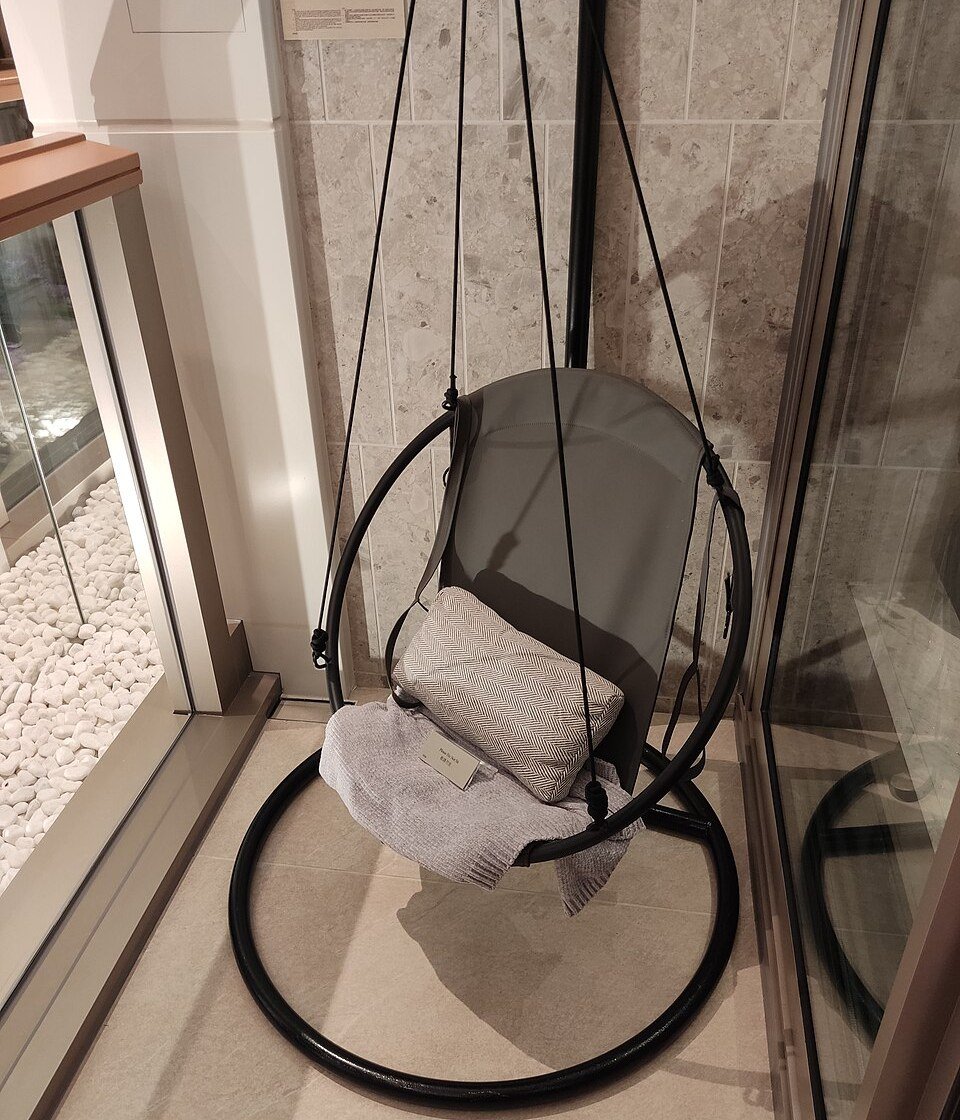
Featured image: An indoor hanging swing chair (not a Harkla product), shown for illustration. Photo by Prie822reraKWAN, CC BY-SA 4.0, via Wikimedia Commons, cropped.