If you live in the San Francisco Bay Area and your gas water heater is getting old, you just got more time. On Nov. 4, 2026, the Bay Area Air District’s board voted 16-1 to push back its zero-emission water heater rule by a year, to January 2028, and added exemptions that the agency’s staff estimate could cover about half of Bay Area households.
The short version: nobody has to rip out a working gas water heater, and repairs are still allowed. The rule only applies when you replace a water heater, and even then many owners can still install gas because of income, housing-cost, space or electrical limits.
What the Air District actually decided
The vote amended Rule 9-6, which has limited nitrogen oxide (NOx) emissions from gas-fired water heaters since 1992. In 2023 the district tightened it to a zero-NOx standard that was due to start in January 2027. Under the amended rule, that start date moves to January 1, 2028.
According to the Air District, the standard applies only when a property owner replaces an existing water heater. It does not require anyone to remove a working appliance, and it does not cover stoves, dryers or fireplaces. In practice, a compliant replacement is usually an electric heat pump water heater, as KQED reported.
The board did not adopt the changes unanimously. CalMatters reported that San Francisco Supervisor Shamann Walton voted no over affordability concerns, Benicia Mayor Steve Young abstained, and San Mateo County Supervisor Ray Mueller said he wished the board could repeal the rule entirely.
Who is exempt from the Bay Area gas water heater rule
The amendments create several exemption categories. Based on the Air District’s announcement and reporting by CalMatters and KQED, you can still install a gas water heater if any of these apply:
- Lower income. Owners earning less than 80% of the area median income, including people enrolled in programs such as Medi-Cal or CalFresh.
- High housing costs. Households paying more than 28% of their income toward mortgage and property taxes.
- Space limits. Homes without enough room or ventilation for a compliant unit, such as a cramped closet or low ceiling.
- Electrical limits. Properties with panels below 100 amps, not enough panel capacity, or a need to run electrical lines more than 50 feet.
- Small tanks. Water heaters of 30 gallons or less, plus mobile home water heaters, don’t have to meet the zero-NOx standard.
CalMatters reported that the district estimates about 20% of Bay Area households qualify under the income and housing-cost tests, and that space or electrical barriers could cover another estimated 20% of installations. KQED reported that income-based exemptions will be self-reported through an online portal, while a contractor will need to show that a home meets the electrical constraints. The space and electrical exemptions are one-time, meaning they cover one gas replacement at that address rather than a permanent pass, according to the California Apartment Association.
Apartments and larger systems get until 2033
Water heaters in multifamily buildings and deed-restricted affordable housing, along with large water heaters, hydronic units and specialized high-heat uses, now have until January 1, 2033. The rule also allows temporary gas installations in emergencies. The apartment association says licensed contractors can install a temporary gas unit with an exemption certificate, but it must be removed within 12 months unless it qualifies under another exemption.
What a heat pump water heater costs compared with gas
Cost is the main sticking point. Air District staff estimate a heat pump water heater costs roughly $3,500 more to install than a comparable gas model, according to both KQED and CalMatters. Heat pump models use roughly a quarter to a third as much energy as standard gas units, but because electricity often costs more than gas in California, the bill savings are smaller than that efficiency gap suggests.
The district’s consultant estimated the amended rule will cost households that replace water heaters about $372.8 million a year after roughly $60.8 million in energy bill savings, CalMatters reported. The district estimates up to 120,000 Bay Area households replace a water heater each year.
On the other side, the Air District says pollution from gas water heaters and furnaces causes as many as 85 premature deaths and 15,000 asthma attacks in the Bay Area each year. A district spokesperson told CalMatters the amended water heater rule alone would prevent up to 16 premature deaths a year, though staff also estimate the exemptions could put roughly half of the originally projected pollution cuts out of reach.
What to do if your gas water heater is aging
Tank water heaters often fail without much warning, so a little planning now gives you more options and better prices.
- Check the age of your tank. The manufacture date is usually encoded in the serial number on the label. If yours is near the end of its expected life, start planning now instead of waiting for a failure. Our guide to troubleshooting water heater problems covers the warning signs, like rumbling, rusty water or leaks around the base.
- Look at your electrical panel. Find the amp rating on the main breaker. A panel under 100 amps or one that is already full is one of the exemption triggers, and it is also the most common reason a heat pump install gets expensive. If you already trip breakers often, read up on managing overloaded circuits before adding a new electric load.
- Measure the space. Heat pump water heaters pull heat from the surrounding air, so they generally need more room and airflow than a gas tank. Note the closet dimensions and ceiling height so contractors can quote accurately.
- Check whether you qualify for an exemption. If your income is under 80% of area median or your mortgage and property taxes take more than 28% of income, you may be able to stay with gas after 2028.
- Get two or three quotes before an emergency. Ask each contractor to price a heat pump option and a gas option, and whether any panel or wiring work is needed.
- Look for rebates. The Air District’s Building Appliances page lists the compliance timeline, exemption details and available rebates. SPUR estimates the Bay Area will get about $55 million a year in heat pump incentive funds over the next few years, according to CalMatters. Check with your city and utility too, since programs and amounts change.
If you are weighing other replacement options, keep in mind that the rule targets NOx emissions, not just tanks. Gas tankless units still burn gas, so read the pros and cons of tankless water heaters with the new rule in mind and ask installers whether a given model would comply after January 2028.
How this fits into California’s bigger picture
The Bay Area rule is the first gas water heater phaseout of its kind in California, according to CalMatters, and it arrives as other regulators pull back. Southern California’s South Coast Air Quality Management District backed away from its proposed appliance rules last year, and the California Air Resources Board has scaled back its earlier goal of making all new space and water heaters sold in the state zero-emission by 2030.
The 2023 Bay Area rules also included a separate measure aimed at phasing out new gas furnaces starting in 2029, as KQED noted. This week’s vote amended the water heater rule, so if you are also planning an HVAC replacement, keep an eye on that furnace timeline. For more on keeping heating costs in check this season, see our look at what winter 2026-27 heating will cost.
FAQ
Do I have to replace my gas water heater in 2028?
No. The rule does not require anyone to remove a working gas water heater, and repairs are still allowed. It applies only when you replace the water heater on or after January 1, 2028.
Does the rule ban gas stoves or dryers?
No. The Air District says the water heater standard does not apply to stoves, dryers or fireplaces.
Can I install gas if my water heater fails in an emergency after 2028?
The amendments allow temporary installations in emergencies. A temporary gas unit generally has to be replaced within 12 months unless the property qualifies under another exemption.
This article explains a regional regulation for general information only. Rules, exemptions and rebates can change, so confirm details with the Bay Area Air District and a licensed contractor before buying equipment.
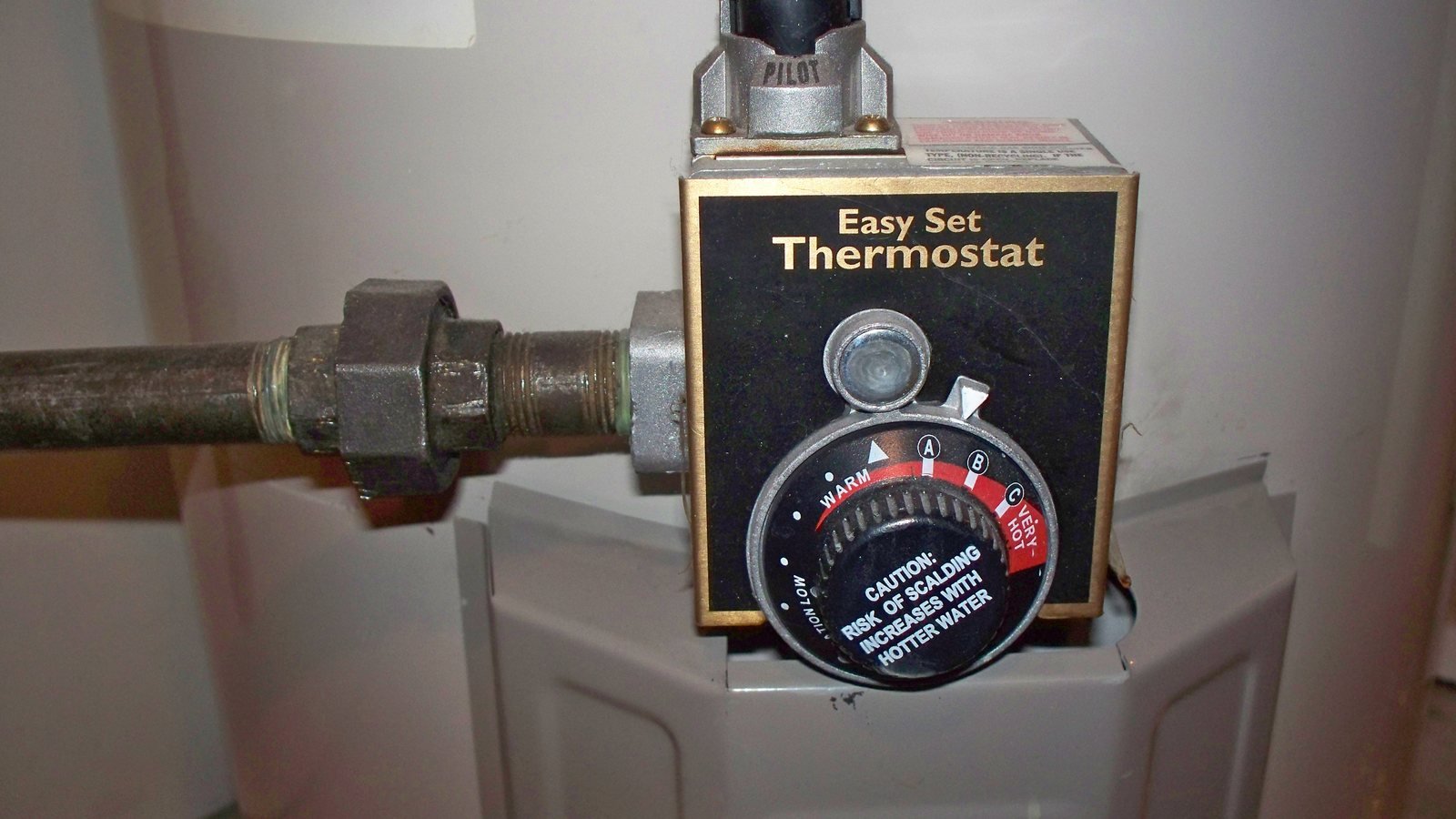
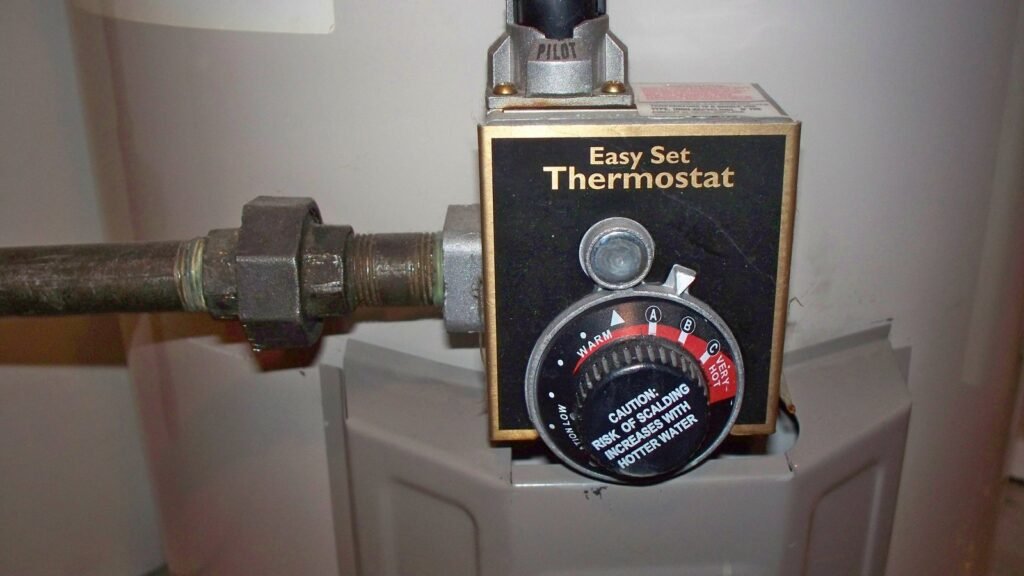
Featured image: Gas water heater thermostat dial. Photo by Jason Woodhead, CC BY 2.0, via Wikimedia Commons.