Florida voters approved Amendment 3 on November 3, 2026, with about 62% of the vote, just over the 60% a constitutional amendment needs. Starting January 1, 2027, the homestead exemption for non-school property taxes jumps to $150,000 of assessed value, then to $250,000 in 2028, with inflation adjustments after that. School taxes don’t change, your 2026 bill doesn’t change, and the first lower bills arrive in November 2027. If you already have a homestead exemption, you don’t need to reapply.
Here’s how it works, who gets the full break, how to estimate your savings, and the catches worth knowing about.
What Amendment 3 changes
According to the Florida Department of Revenue’s bulletin on the amendment (November 5, 2026), Amendment 3 does three things:
- A bigger homestead exemption for non-school taxes. The exemption covers assessed value up to $150,000 in 2027 and up to $250,000 in 2028, and it’s adjusted for inflation after that. Non-school taxes are the county, city and special-district lines on your bill.
- A lower cap for non-homestead property. For rentals, second homes and commercial property, the yearly cap on assessment increases drops from 10% to 5%.
- A waiting period for newcomers. People who aren’t Florida residents as of December 31, 2026 get the old amounts when they qualify: $25,000 off for school taxes and up to $50,000 off for non-school taxes. They become eligible for the bigger exemption starting with their fifth year of exemption.
The amendment takes effect January 1, 2027, and first applies to the 2027 tax roll.
What it doesn’t change
The Palm Beach County Property Appraiser’s Amendment 3 page lists the limits clearly:
- School taxes stay. For school taxes, a homestead still gets only the first $25,000 exempt. Almost every homesteaded home will still get a tax bill.
- Non-ad valorem assessments stay. Flat fees such as solid waste, stormwater or community development district (CDD) charges aren’t based on value, so the exemption doesn’t touch them.
- Save Our Homes stays. The assessed value of a homestead can still rise no more than 3% or the change in the Consumer Price Index (CPI) each year, whichever is lower.
- Portability stays. You can still move your Save Our Homes benefit to a new Florida homestead, but you have to apply for the exemption on the new home.
- Your 2026 bill doesn’t change. The new amounts first show up on August 2027 TRIM notices (the proposed-tax notice) and on November 2027 tax bills.
Local governments also still set their own millage (tax) rates every year. The exemption shrinks the value they can tax, but it doesn’t cap the rate. For a refresher on how assessed value, exemptions and millage fit together, see our guide to understanding property tax.
How much will you save?
It depends on two numbers: your home’s assessed value (not its market value) and the combined non-school millage where you live. FOX 13 Tampa Bay reported that estimates put typical savings at roughly $1,400 to $2,500 a year. Hillsborough County Property Appraiser Bob Henriquez warned that it’s “not a set number.” It varies with your assessed value, how long you’ve owned the home and how long it’s been homesteaded.
A simple way to estimate it
- Find your assessed value on your latest TRIM notice or your county property appraiser’s website.
- Add up the non-school millage lines on your tax bill. One mill is $1 of tax per $1,000 of taxable value.
- Today, a typical homestead gets $50,000 off for non-school taxes. In 2027 that becomes $150,000, so most homes with an assessed value of $150,000 or more get $100,000 more exempt. Multiply $100,000 by your non-school millage and divide by 1,000.
- For 2028, the extra exemption grows to $200,000 over today’s level for homes assessed at $250,000 or more.
Example (hypothetical numbers): Say a homestead is assessed at $300,000 and pays a combined 15 mills in non-school taxes. Under 2026 rules, $250,000 is taxable for non-school purposes, about $3,750. In 2027, $150,000 is taxable, about $2,250, which saves roughly $1,500. In 2028, $50,000 is taxable, about $750. That assumes the same assessed value and rates. School taxes on that home wouldn’t change. Homes assessed below $150,000 would owe no non-school, value-based taxes in 2027 at all.
Several counties have put up calculators. Palm Beach County has an official Amendment 3 estimator, and other property appraisers’ sites are worth checking for theirs. Every calculator says the same thing: these are estimates, and future millage rates or state implementing laws could change the result.
Who gets the full exemption, and the December 31, 2026 date
The date that matters most right now is December 31, 2026. As CBS12 and the Department of Revenue explain, people who are Florida residents by that date are in line for the full exemption once they qualify. People who become residents later start at the old $50,000 non-school amount and get the bigger exemption from their fifth year of exemption.
The usual homestead rules still apply. According to the Department of Revenue’s exemptions page, you must own the home and make it your permanent residence as of January 1 of the tax year. You also file the application (Form DR-501) with your county property appraiser by March 1.
What to do now
- Already homesteaded: You don’t need to do anything. Appraisers will apply the increase automatically. Just report any change that affects eligibility, such as renting the home out.
- Bought your Florida home in 2026 but haven’t filed: Make sure you qualify as a permanent resident and file for the 2027 exemption by March 1, 2027.
- Moving to Florida: If you plan to establish residency, the timing around December 31, 2026 may matter a lot. Check the details with your county property appraiser before you count on the bigger exemption.
- Own a rental or second home: You don’t get the homestead exemption, but the 5% assessment cap limits how fast your assessed value can rise for non-school taxes. That limits growth in taxable value, not your actual bill.
The catches: local budgets, insurance and rent
The tax cut is real, but the money has to come from somewhere. Florida TaxWatch, citing state Revenue Estimating Conference figures, projects that local property-tax revenue will fall by about $4.9 billion in the first budget year, growing to roughly $11.8 billion a year by 2031-32, CBS12 reports.
Carrier Management (via Bloomberg) reports that the shortfall could affect home insurance. If cities cut fire services, a community’s Insurance Services Office (ISO) fire-protection rating could drop. The Insurance Information Institute says that’s one of many factors insurers use to set premiums. The same report notes that local governments may turn to sales taxes, special assessments and fees to make up lost revenue. It also says renters could see higher rents if landlords pass along costs, since rentals don’t get the homestead break.
Bottom line: watch your 2027 TRIM notice for millage-rate changes and new fees, and shop your policy at renewal. Our explainer on what drives home insurance costs covers the factors you can control. And if you’re in a flood zone, see how FEMA’s new online flood insurance tool works.
FAQ
When does Amendment 3 take effect?
January 1, 2027. It first applies to the 2027 tax roll, and the first lower bills arrive in November 2027.
Do I need to reapply for my homestead exemption?
No. If you already have a homestead exemption and still qualify, county property appraisers say they’ll apply the increase automatically.
Does Amendment 3 eliminate property taxes on my home?
No. School taxes and flat non-ad valorem assessments remain. Only non-school, value-based taxes get the larger exemption.
I’m moving to Florida in 2027. Do I get the $150,000 exemption?
Not right away. According to the Department of Revenue, people who aren’t Florida residents as of December 31, 2026 get up to $50,000 off non-school taxes and $25,000 off school taxes when they qualify. They become eligible for the larger exemption starting in their fifth year of exemption.
Does it help landlords and second-home owners?
Partly. They don’t get the homestead exemption, but the yearly cap on assessment increases for non-homestead property drops from 10% to 5% for non-school taxes.
This article explains publicly reported details of Amendment 3 and isn’t tax or legal advice. Implementing legislation and local tax rates could change how it affects your bill, so confirm with your county property appraiser.
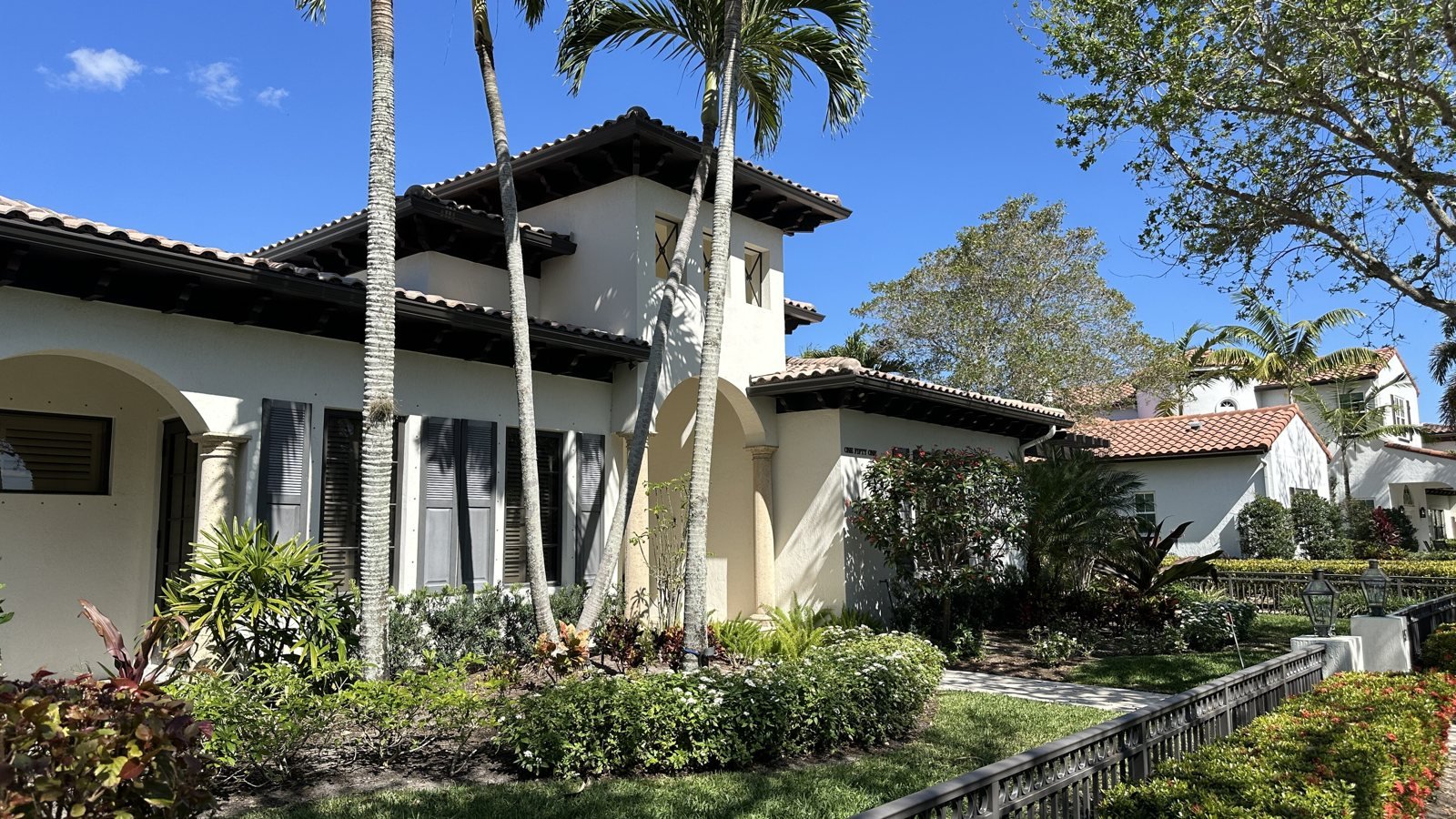
Featured image: “Typical house in the Valencia neighborhood of Abacoa, Jupiter, Florida” by GrammarObsessed, Wikimedia Commons, licensed CC BY-SA 4.0, cropped.